
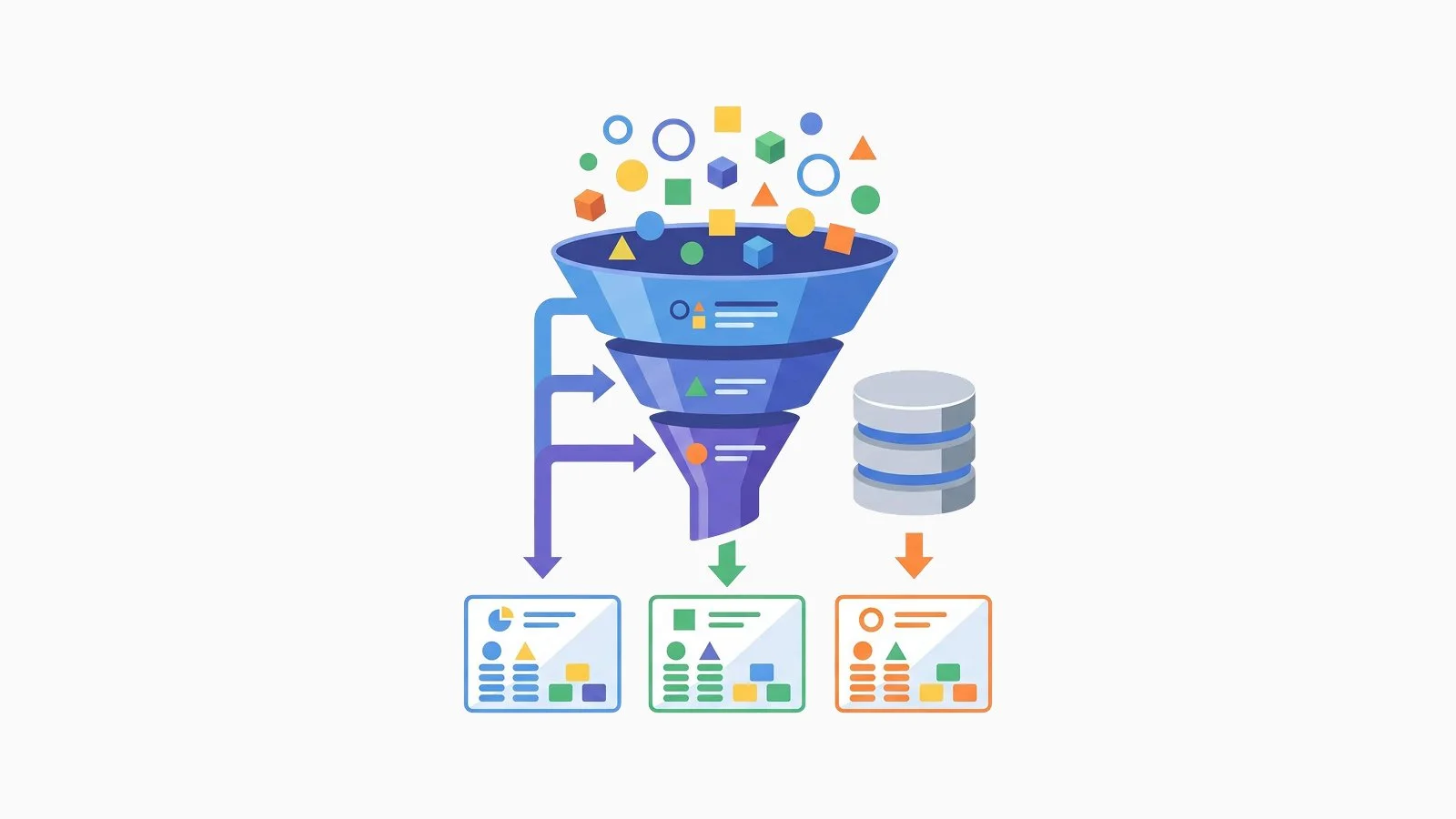
Industrial organizations have access to more information than ever before. Product data, engineering data, manufacturing data, service information, and customer insights are constantly increasing. Many organizations have also invested heavily in improving data quality, governance, and accessibility. Yet when critical decisions need to be made, teams still spend significant time debating which information to trust, which metrics matter, and who has the authority to decide.
"We've seen teams spend significant time debating which data to trust before they can even begin discussing the product decision itself."
The challenge is often not a lack of information. It is understanding which information matters for a specific product decision and how it should be interpreted in context.
What We See
Teams are often overwhelmed by the volume of available information.
Different functions rely on different data sources.
Data investments do not always lead to faster or better decision-making.
Our Perspective
More data does not automatically lead to better product decisions.
Every product decision requires context. What decision is being made? Who is responsible for making it? What information is relevant? And what trade-offs need to be considered?
"In one discussion about a product change, the debate was not caused by missing information. Everyone had access to the same data. The challenge was that different functions interpreted the information through different business lens."
Information creates value when it helps people make product decisions with greater confidence, consistency, and speed. This requires more than data availability. It requires agreed decision-making criteria, clear ownership, and a common understanding of what information matters for the business outcome.
Key Takeaway
The goal is not to collect more data.
The goal is to ensure that the right people have the right information, in the right context, to make better product decisions. Data creates value when it supports product decisions, not simply because it exists.